

The Dinner Question That Breaks Physicians
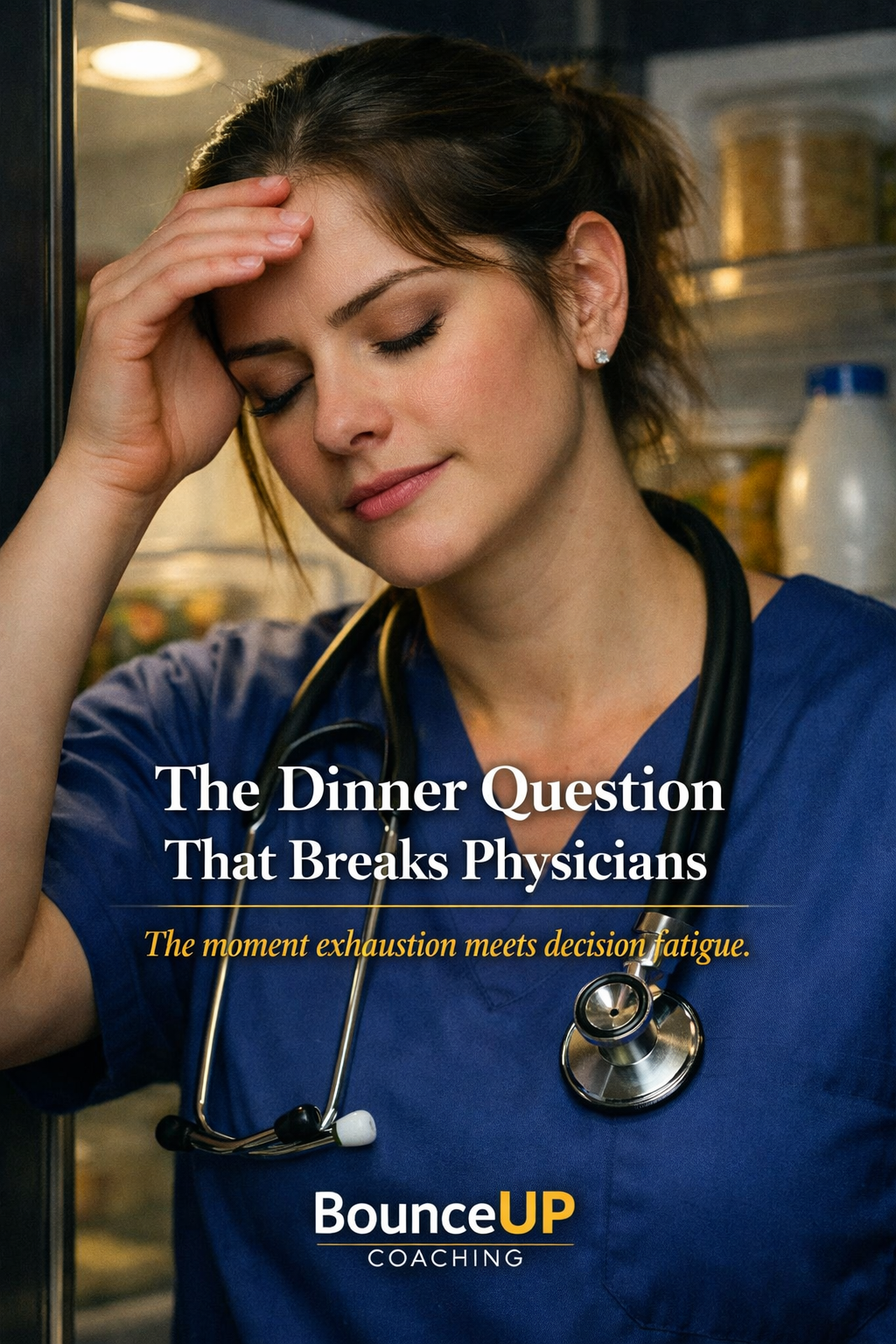
“After a full day of clinic, procedures, patient messages, and charting,
I can make decisions that carry real consequences.
And then I get home.
The question waiting for me is much simpler:
What’s for dinner?”
Why Decision Fatigue Hits Physicians Hard
For years, I found it almost embarrassing how difficult that question felt.
There were groceries in the refrigerator. There was food in the pantry. Nobody was asking me to solve a complex problem. Yet some evenings I would find myself standing in front of an open refrigerator, staring at perfectly reasonable options and feeling completely unable to choose one.
If you're a physician, you've probably had your own version of this moment.
The easy explanation is that we're tired. Certainly that's part of it. But I don't think fatigue tells the whole story.
The Shift That Changed Everything
What I eventually realized is that dinner wasn't the problem. The problem was that dinner represented one more decision at the end of a day already filled with decisions. Decision fatigue is REAL!
Physicians rarely appreciate how much cognitive work we perform before we ever leave the office. Every patient encounter requires dozens of small judgments. We decide what deserves attention, what can wait, what carries risk, and what doesn't. We absorb information, prioritize competing demands, and continuously adjust our plans as new information appears.
Most of that work becomes so familiar that we stop noticing it.
But our brains notice.
By the time evening arrives, we've already spent hours drawing from the same pool of mental energy.
That's why seemingly simple questions can feel surprisingly difficult.
What should we eat?
Should we stop at the store?
Should we cook?
Should we order takeout?
What sounds good?
What do we already have?
None of these decisions are particularly hard in isolation. The challenge is that they arrive after hundreds of other decisions have already consumed our attention.
How Structure Free’s Mental Space
For a long time, I approached this problem the same way many physicians approach problems. I assumed I needed a better solution. Better planning. Better discipline. Better organization.
Instead, what helped most was removing the decision altogether.
I started assigning meals to days of the week.
Nothing elaborate.
“The areas that create the most frustration aren’t the ones requiring the most work — but the ones requiring the most repeated decisions.”
I created a few simple categories. Quick and easy meals for busy nights. Healthier meals when I had a little more bandwidth. Comfort-food meals for the evenings when the day had been especially draining.
Once a week, usually on Sunday, I spent a few minutes deciding what each evening would look like.
Then I stopped thinking about it.
What surprised me wasn't how much time this saved. It was how much mental space it freed up.
I no longer walked into the kitchen and started negotiating with myself. I wasn't evaluating options, second-guessing choices, or opening the refrigerator three separate times hoping inspiration would strike.
The decision had already been made.
The structure carried the load.
And over time I began noticing the same principle everywhere else in my life.
The areas that created the most frustration weren't necessarily the areas requiring the most work. They were often the areas requiring the most repeated decisions.
